
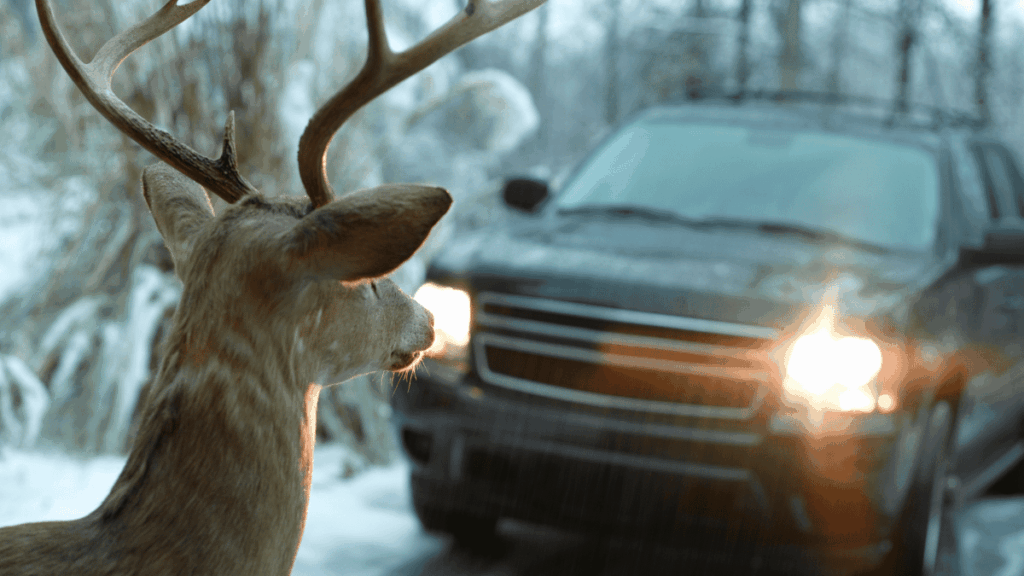
If you live anywhere with deer, the next few weeks are the most dangerous time of year to be on the road. And the end of daylight saving time this weekend just made things worse.
Why November Is So Dangerous
Fall is mating season for deer, known as the rut. Deer are on the move, often chasing each other, and they’re far less careful about crossing roads.
According to State Farm, October, November and December account for about 41% of all animal collision claims, with roughly 650,000 incidents in those three months alone.
Across the U.S., deer cause more than a million crashes a year, leading to about 200 deaths and around 29,000 serious injuries, according to Clarkson University biology professor Tom Langen, writing in The Conversation.
What the Time Change Has to Do With It
Deer are most active at dawn and dusk. When the clocks fall back, millions of evening commutes suddenly shift right into those dusk hours.
Langen’s research team studied more than 86,000 deer crashes in New York. They found that in the week after the fall time change, crashes during the evening commute jumped by 72%. Morning commute crashes dropped by 37%, since mornings got brighter. But overall, commute-hour deer crashes rose by 19%.
Their research also found that dusk is about eight times riskier than daytime for deer crashes, hour for hour.
The Riskiest States
State Farm’s latest data puts the odds of a U.S. driver hitting an animal at about 1 in 139. But in some states, the odds are much higher:
| State | Odds of an Animal Collision |
|---|---|
| West Virginia | 1 in 40 |
| Montana | 1 in 53 |
| Wisconsin | 1 in 58 |
| Michigan | 1 in 61 |
| Pennsylvania | 1 in 62 |
West Virginia has held the top spot for more than a decade. Pennsylvania had the most claims overall, at an estimated 147,000.
How to Avoid Hitting a Deer
- Slow down at dawn and dusk, especially on rural roads and near woods or fields.
- Use your high beams when there’s no oncoming traffic. They help you spot eyes reflecting in the dark.
- If you see one deer, expect more. Deer often travel in groups.
- Pay attention to deer crossing signs. They’re placed where crashes happen often.
- Don’t swerve. This is the big one. If a deer jumps out, brake firmly and stay in your lane. Many serious crashes happen when drivers swerve and hit another car or a tree.
- Always wear your seat belt.
If You Do Hit a Deer
Pull over somewhere safe and turn on your hazard lights. Call police if the deer is blocking the road or if anyone is hurt. Don’t go near the animal, even if it looks dead. An injured deer can kick hard.
Take photos of the damage and the scene, and check your car for leaks, broken lights or tire damage before driving on. Animal collisions are usually covered by the comprehensive part of your auto insurance, after your deductible.
Sources