
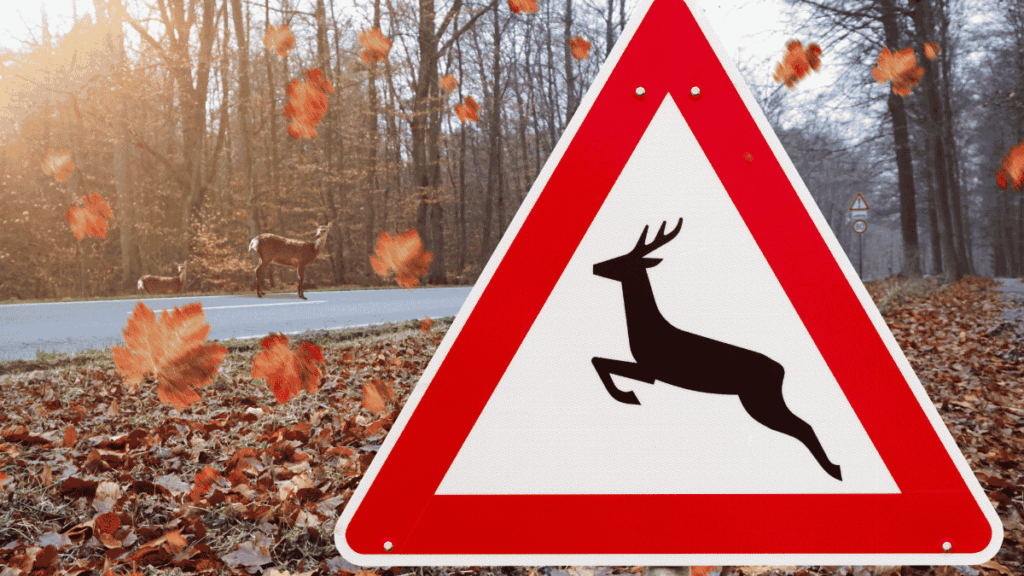
If it feels like you’re seeing more deer on the side of the road lately, you’re not imagining it.
Highway patrols and AAA offices in several states are warning drivers that we’ve hit peak deer crash season, and November is the most dangerous month of all.
Why November Is So Risky
Two things are happening at once right now.
First, deer are in their fall breeding season. During this time they move around much more and act unpredictably. Second, daylight saving time just ended. That puts more people on the road at dawn and dusk, which is exactly when deer are most active.
AAA’s numbers from Connecticut show how sharp the jump is. Drivers there are more than twice as likely to hit a deer in November than in any other month.
How Big the Problem Is
Across the country, animal-related crashes add up fast. The AAA Foundation for Traffic Safety counts:
| Every Year in the U.S. | Number |
|---|---|
| Animal-related crashes | More than 350,000 |
| Injuries | Nearly 50,000 |
| Deaths | Nearly 300 |
About one-third of those crashes happen in October and November alone.
State numbers tell the same story:
- Ohio: more than 111,000 deer-related crashes since 2021, and 47% of them happened in October, November and December.
- Tennessee: more than 8,000 deer crashes in 2024, with 5 deaths and about 460 injuries.
- Missouri: 2,829 deer crashes in 2025, with 435 injuries and 6 deaths. Most happen between 6 and 7 a.m.
Swerving Is Often the Bigger Danger
This part surprises a lot of drivers. Swerving to miss a deer is often more dangerous than hitting it.
In Connecticut, about 8% of crashes where drivers hit a deer head-on caused injuries. When drivers swerved and hit something else instead, like a tree, a pole or another car, the injury rate jumped to more than 21%.
Motorcycle riders face the highest risk of all. In Ohio, motorcycles are involved in only 1% of deer crashes, but they make up 82% of the deadly ones.
How to Stay Safe
- Slow down at dawn and dusk. That’s when deer are most active.
- Scan the shoulders, not just the road in front of you.
- Use your high beams when there’s no oncoming traffic.
- Expect more than one. Deer rarely travel alone. If one crosses, another is probably close behind.
- Brake firmly and stay in your lane. Don’t jerk the wheel.
- Take deer crossing signs seriously. They’re placed where crashes keep happening.
If You Hit a Deer
Move your car somewhere safe if you can, and turn on your hazard lights.
Don’t go near the animal. An injured deer can kick hard and cause serious injuries.
Call police if anyone is hurt or the deer is blocking the road. Then take photos of the damage for your insurance claim.
Sources