
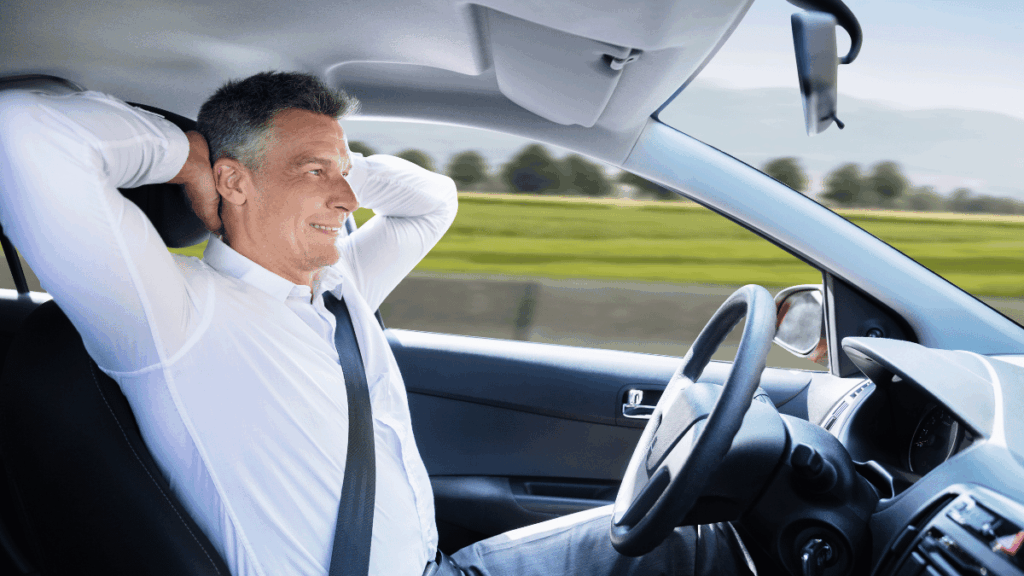
Car ads love to make it look like the future is already here: a driver cruising down the highway, hands in their lap, while the car does all the work. And some of today’s cars really can steer, brake and speed up on their own for long stretches of highway.
But here’s the part the ads don’t spell out: there’s no car you can buy today that truly drives itself. Every system on the market still needs you to pay attention and be ready to take over.
Here’s what today’s “almost self-driving” cars can actually do, which ones offer it, and what’s coming next.
First, a Quick Guide to the “Levels”
Engineers use a six-step scale, from Level 0 to Level 5, to describe how much a car can drive itself.
- Level 0–1: Basic help, like cruise control or lane-keeping alerts.
- Level 2: The car can steer, brake and accelerate at the same time, but you’re still the driver and must watch the road at all times. Every hands-free system you can buy in the U.S. today falls here.
- Level 3: “Eyes-off” driving. In specific conditions, the car drives and you can look away, but you must take over when the car asks.
- Level 4–5: The car drives itself with no human needed, either in certain areas (Level 4) or everywhere (Level 5). Think robotaxis, not cars in your driveway.
So when an automaker says “hands-free,” it means you can take your hands off the wheel. It doesn’t mean you can take your eyes off the road.
GM Super Cruise: The Most Widely Used
General Motors’ Super Cruise is available on a long list of Cadillac, Chevrolet and GMC models, including trucks and SUVs.
On mapped highways, it lets you drive with your hands off the wheel. A camera on the steering column watches your eyes. If you look away from the road for too long, the system warns you, and eventually it will stop working.
GM says customers have now driven more than 1.2 billion hands-free miles with Super Cruise, across nearly 750,000 vehicles. The company has mapped about 600,000 miles of compatible roads in North America.
Super Cruise usually comes with a free trial on new vehicles, then requires a paid plan.
Ford BlueCruise: Hands-Free on Mapped Highways
Ford’s BlueCruise works a lot like Super Cruise. On pre-mapped divided highways, you can drive hands-free while a camera makes sure you’re watching the road. It’s available on a range of Ford and Lincoln models.
Ford sells BlueCruise after a free trial, as a monthly or yearly subscription, and on some models as a one-time purchase. Prices have changed over the years, so check with a dealer for the current cost.
Tesla Full Self-Driving (Supervised)
Tesla’s system is the one with the boldest name, and the most confusion around it. Despite being called “Full Self-Driving,” it’s a Level 2 system. Tesla now calls it “FSD (Supervised),” and drivers must stay engaged and ready to take over at all times.
Unlike Super Cruise and BlueCruise, Tesla’s system isn’t limited to mapped highways. It can also work on city streets, handling turns and traffic lights.
In early 2026, Tesla stopped selling FSD as an $8,000 one-time purchase. New buyers now pay $99 a month for a subscription. Owners who already bought it keep it.
The system is also under federal review. The National Highway Traffic Safety Administration has opened an investigation covering about 2.88 million Teslas, after more than 50 reports of traffic violations and crashes. Investigators are looking at whether the system does enough to keep drivers alert.
What Happened to Mercedes’ “Eyes-Off” System?
For a while, Mercedes-Benz had the most advanced system you could buy in the U.S. Its Drive Pilot was the first Level 3 system approved here, letting drivers take their eyes off the road in heavy highway traffic.
But it came with big limits. It only worked at up to 40 mph, and only in California and Nevada.
Now Mercedes has stepped back. According to WardsAuto, the company dropped plans to offer an updated Drive Pilot in the refreshed 2026 S-Class in the U.S. Instead, it’s rolling out a new Level 2 system, called MB.Drive Assist Pro, in the S-Class and the new CLA. Mercedes pointed to the complex, state-by-state rules for Level 3 cars and said it’s working on a future system that could work at up to 81 mph.
That means right now, every hands-free system on sale in the U.S. still requires your eyes on the road.
What’s Coming Next
GM is aiming to be next. The company says it will bring true “eyes-off” highway driving to market in 2028, starting with the all-electric Cadillac Escalade IQ. The system will use cameras, radar and lidar, and GM says it will later expand to pickups and crossovers.
Other automakers are working on similar systems, but none have committed to a firm U.S. launch date.
The Most Important Thing to Remember
These systems can make long highway drives less tiring. But they’re driver assistance, not a chauffeur. They can miss stopped vehicles, struggle in bad weather, or get confused by faded lane lines and construction zones.
If you use one:
- Keep your eyes on the road, even when your hands are free.
- Know where it works. Most hands-free systems only work on mapped, divided highways.
- Be ready to take over instantly, especially in work zones, bad weather and heavy traffic.
- You’re still legally responsible. If the car crashes while a Level 2 system is on, you’re the driver.
Sources