
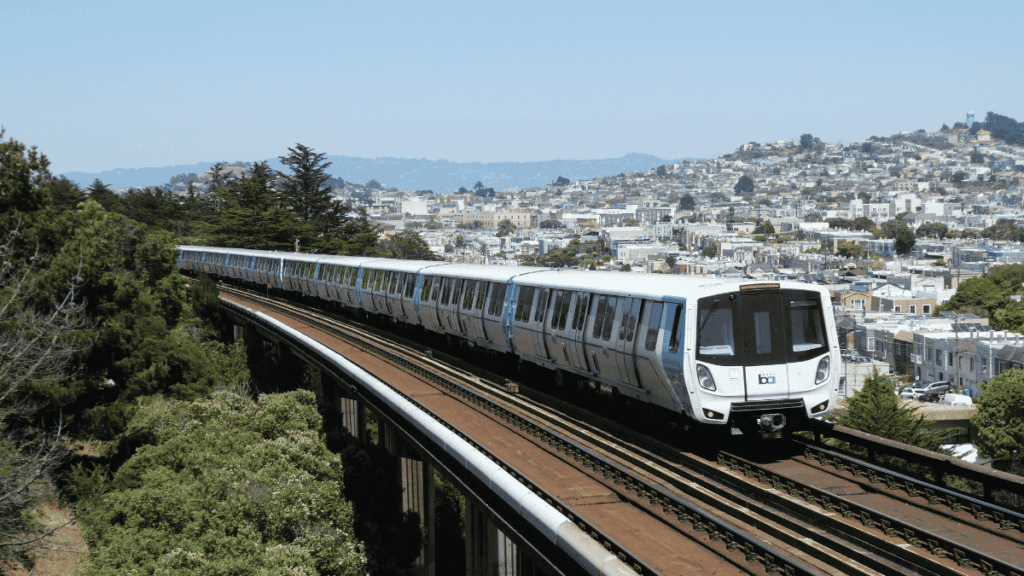
Bay Area transit riders can breathe a little easier. Voters in five counties have approved Measure RTM, a new sales tax meant to keep BART, Muni, Caltrain and other transit systems running for the next 14 years.
According to early results reported by the San Francisco Standard, the measure passed with about 62% of the vote. It only needed a simple majority.
What Measure RTM Does
The measure adds a sales tax in five counties:
- Half a cent in Alameda, Contra Costa, San Mateo and Santa Clara counties
- One cent in San Francisco
The money will go to more than 20 transit agencies, including BART, Muni, Caltrain, AC Transit, VTA, the San Francisco Bay Ferry and Golden Gate Transit. It’s expected to raise roughly $1 billion a year, and the tax is set to last 14 years. Local reports say it’s scheduled to start in April 2027.
San Francisco voters also approved Proposition H, a separate parcel tax to fund Muni for 15 years, with about 73% of the vote.
The Cuts That Were Avoided
Transit agencies had warned that without new money, they’d have to make deep cuts starting next year. According to the SF Standard, those plans included:
- BART: closing up to 15 stations, running trains only every 30 minutes on three lines, ending service at 9 p.m., and raising fares and parking fees by up to 50%
- Muni: cutting 20 bus lines, running half as many buses on remaining routes and ending cable car service
- Caltrain: ending service at 9 p.m., dropping weekend trains and closing more than a third of its stations
Why Drivers Should Care
Even if you never ride a train, this vote affects you. A study by the nonprofit SPUR warned that if transit service had been gutted, many riders would have switched to driving, and rush-hour traffic on the Bay Bridge could have roughly doubled.
Keeping transit running means fewer extra cars on already crowded freeways.
What Opponents Said
Not everyone was on board. Opponents argued that transit agencies already get billions of dollars a year and should cut costs before asking taxpayers for more. Marc Joffe, who led the opposition campaign, argued lawmakers could have found the money without a new sales tax.
What Happens Next
The measure requires transit agencies to adopt cost-cutting plans to receive the money. The bigger question is what happens in 14 years, when the tax expires. For now, though, Bay Area commuters have a long runway before the next funding fight.
Sources