
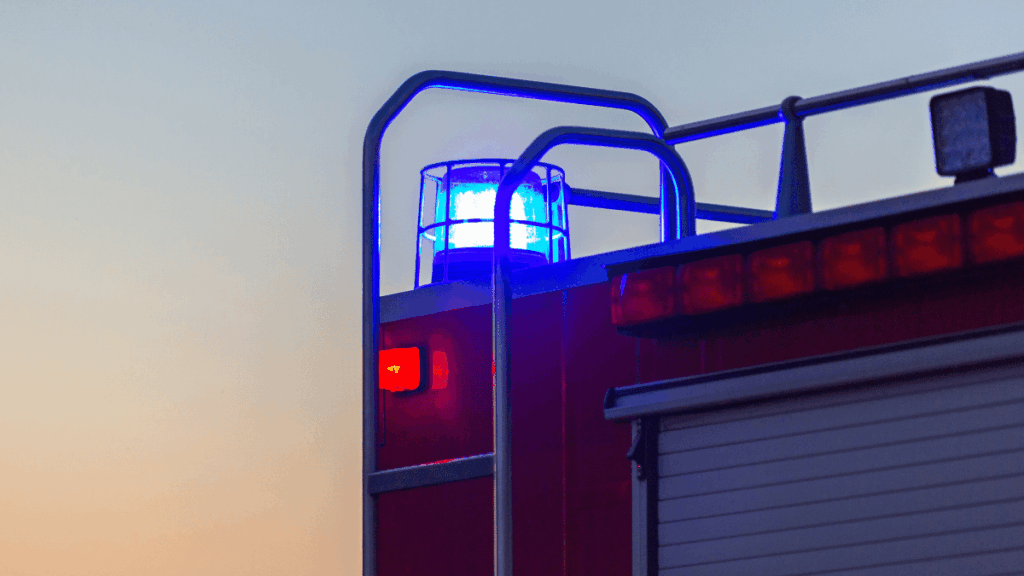
Firefighters, police officers, paramedics and tow truck drivers rush toward crashes every day. But one of the biggest dangers they face isn’t the crash itself. It’s the traffic still flying past them.
This week, November 2 to 6, is Crash Responder Safety Week, a national push to remind drivers that the people working at crash scenes are often just a few feet from moving cars.
The Numbers Are Sobering
According to the Emergency Responder Safety Institute:
- 36 emergency responders were struck and killed while working traffic incidents across the U.S. in 2025.
- 26 more have been killed since the start of 2026.
These are people standing on the side of the road, helping someone else on what may be the worst day of their life.
What the Move Over Law Says
Every state has a Move Over law. The details vary, but the idea is the same everywhere: when you see a stopped emergency vehicle, tow truck or road crew with flashing lights, you need to give them room.
In Michigan, which marked the week with a proclamation from Governor Gretchen Whitmer, drivers must:
- Slow down to at least 10 mph below the speed limit, and
- Move over at least one lane if it’s safe to do so.
Many states have similar rules, and several have recently expanded their laws to cover any stopped car with its hazard lights on, not just emergency vehicles.
Distraction Makes It Worse
A driver looking at a phone can drift onto the shoulder in a split second. In Michigan alone, emergency vehicles were involved in 2,532 crashes in 2025, according to state police data, including two fatal crashes and 330 injury crashes.
There’s some good news: Michigan crashes involving emergency vehicles and distracted drivers dropped by 7.6% from 2024 to 2025. But one crash is still too many when a responder is standing on the road.
How You Can Help
- See lights, slow down. Flashing lights ahead are your cue to ease off the gas right away.
- Move over a full lane whenever you safely can.
- Put the phone down, especially near a crash scene. Don’t slow down to take pictures or video.
- Watch for people on foot. At a crash scene, there may be responders, drivers and passengers walking around.
- Be patient in backups. Traffic near a crash is frustrating, but squeezing past at speed puts lives at risk.
It takes a few seconds to slow down and change lanes. For the people working at that crash scene, those few seconds can be everything.
Sources